Autumn retreat and general meeting in Ardes-sur-Couze (63), from 9 to 11 October 2026
The registration deadline has been extended to 20 September. As the deadlines are very tight, please submit your registration forms by email only, with payment made by bank transfer.
Corinne and Roland Dameron, Jean-Michel Clausse and the IT team have contributed to this page about the trip.
The autumn 2026 trip will take place from 9–11 October 2026 in the Puy-de-Dôme department, in Ardes-sur-Couze. The routes were designed and surveyed by Claude Bénistrand.
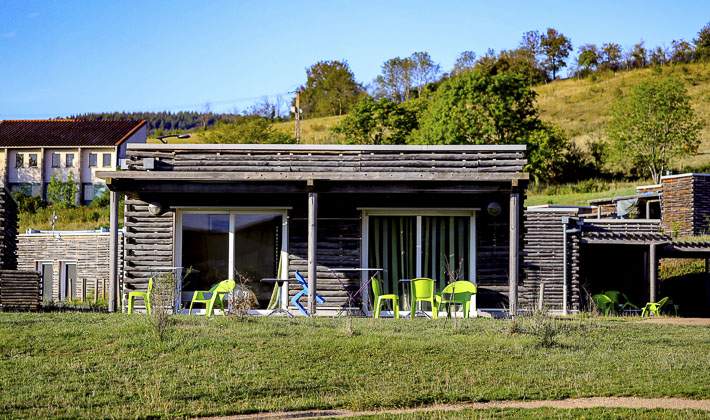
We will be staying at the holiday village Le Cézallier ***. That is where the 2026 general meeting will take place.
Presentation
Ardes-sur-Couze (625 m) lies at the heart of the Auvergne Volcanoes Regional Nature Park, 25 km from Issoire and on the edge of the Cézallier Mountains.Ardes forms a link between the golden plains of the Lembron and the grasslands of the Cézallier volcanic plateaus. The former capital of the Duchy of Mercœur features terraced houses set above a wooded gorge carved out by the Couze (river) at Ardes.
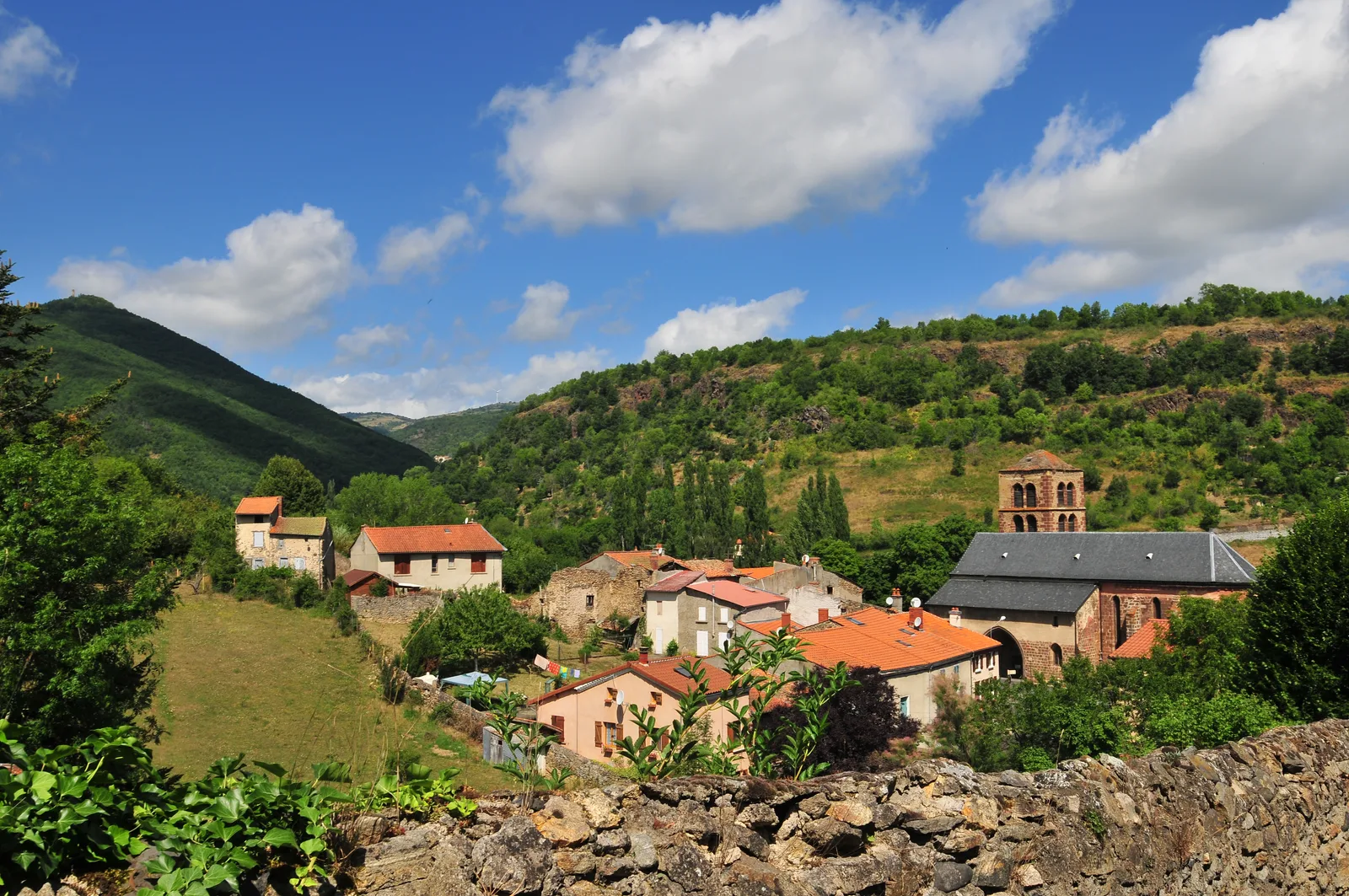
The name «Ardes-sur-Couze» is often used because the village lies on the river known as the Couze d’Ardes – as opposed to the Couze Pavin, which rises at Puy de Sancy and joins the Allier at Issoire. However, the official name of the commune is and remains Ardes, and we shall therefore refer to it as such. Ardes belongs to the Pays d’Issoire, and its inhabitants are known as Ardoisiens.
Its name comes from the word «ardua», which in Gaulish refers to a place on high ground. Ardes offers a unique experience combining history, nature and local traditions. The village, situated on a basalt promontory, retains vestiges of its medieval past, notably the Tour de Besse, built in the 15th century. Ardes is dominated to the west by the Doigt de Mercœur, a curiosity that is the sole (inaccessible) remnant of a fortress built in the 11th century by the once-powerful Mercœur family. The town is also known for its varied natural landscapes and outdoor activities: nestled between the Sancy massif and the Cantal mountains, the Cézallier features vast expanses and small volcanic hills, which will delight hiking and cycling enthusiasts alike.
Ardes lies in the eastern foothills of the Cézallier, of which it is the main market town. The village is divided into two parts: the bulk of the town is situated on a small plateau overlooking the Couze valley, whilst another part lies below, along the river. The village roofs are red, the tiles having replaced the slate slabs. Like so many others in the Cézallier, the village was deserted for a long time: over a century and a half, the village lost 80% of its population. But for some time now, the population has been on the rise again: new pupils at the school, a new grocery shop, a new bakery. Life is returning to the village, and the hope of a revival is evident in the freshly renovated façades of some of the houses.
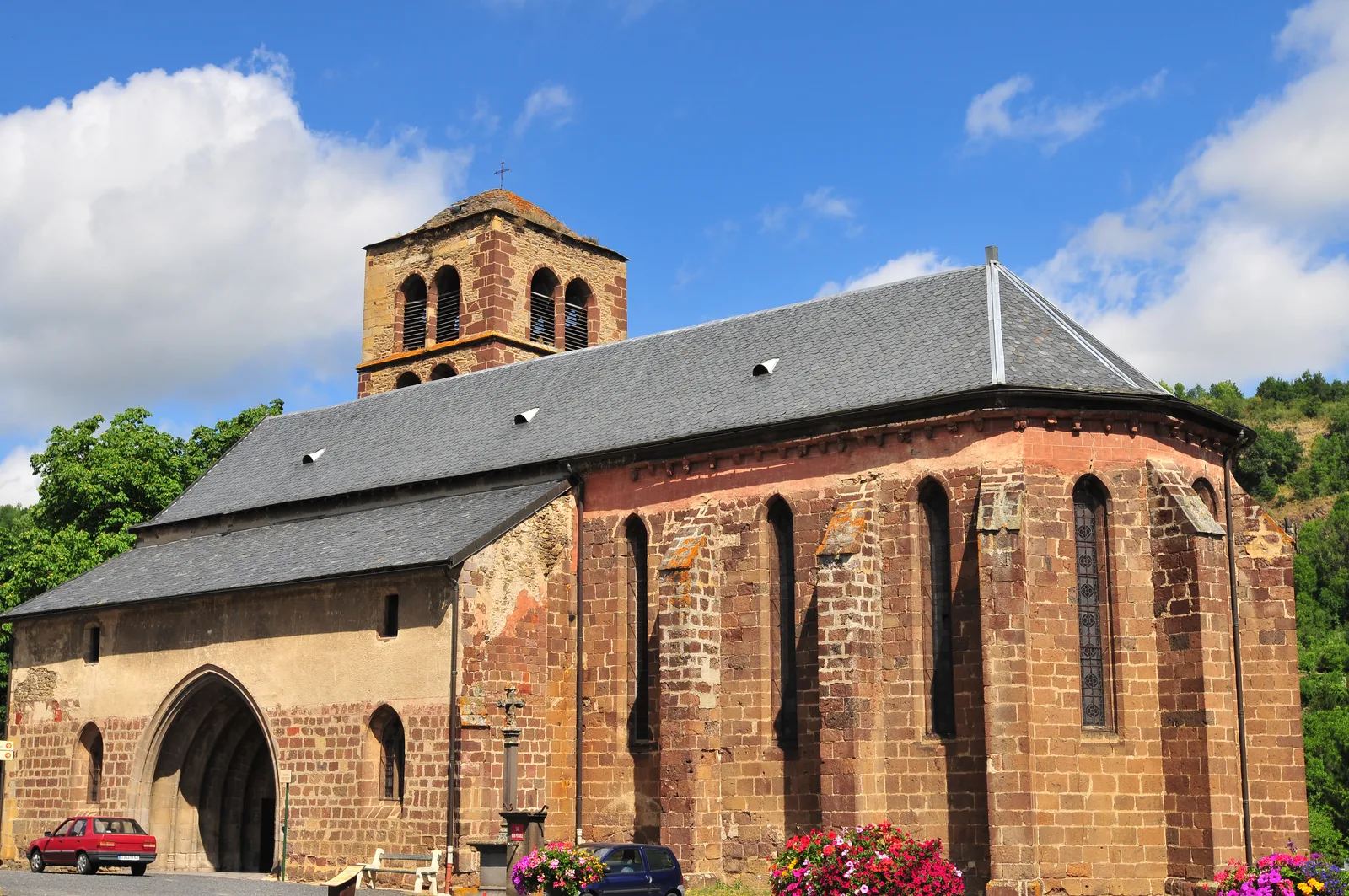
Once the seat of a priory and later of a large community of priests until the 18th century, the lower quarter combined religious and artisanal functions. The Church of Saint-Dizain, a soaring nave built of pinkish-brown tuff and listed as a historic monument, is easily spotted there. It is a Gothic church built over a period of 200 years, between the first third of the 13th century and the 15th century. These different phases of construction make it a fine example of the evolution of the Gothic style, evident in its architecture and decoration. Inside, one discovers splendid, high-quality medieval furnishings, such as a Pietàthe scene from Saint Hubert or even the The Passion of Christ cycle carved from wood, dating from the 15th–16th centuries. The church roof is supported by ribbed vaults. At the back of the church, a small chapel houses the relic of Saint Dizain.
Founded in the 13th century, the «upper» or «new» town of Ardes is a testament to the ambitions of the local lords. The lords of Mercœur established their authority in the 12th and 13th centuries, eventually creating one of the largest estates in Auvergne. Ardes’s regular layout is characteristic of medieval urban planning. On either side of the Grande-Rue lie narrow, deep plots known as «en lanières». You’ll spot them as you walk through the sometimes covered passageways.
Circuits
ccTours Ardes 2026 Route
There are around twenty mountain passes within a 30-kilometre radius of Ardes, spread across the Puy-de-Dôme and Cantal departments. That’s enough to map out a few routes, which are or will be available on the Club’s website. You can leave your mountain bikes at home.
They will be here soon
Our accommodation
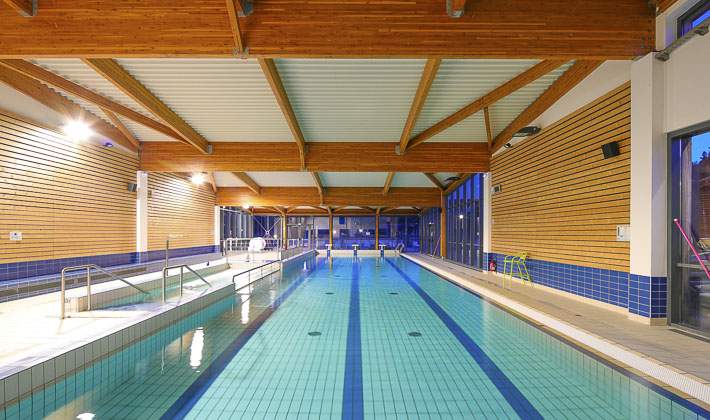
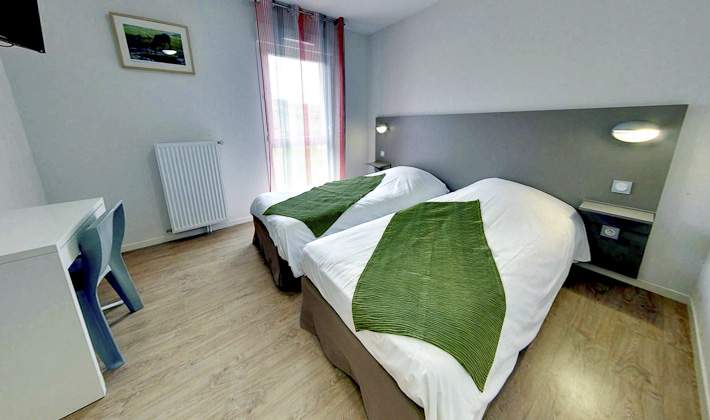
Set amongst lakes and volcanoes, just a few minutes from Ardes, the Le Cézallier*** holiday village is a modern establishment with a Low-Energy Building certification. It offers 27 single-storey, fully equipped cottages for 2 to 6 people, and 54 comfortable rooms for 2 to 5 people. Good weather isn’t guaranteed, though, especially in October: no worries, the holiday village has a covered, heated water park with a 25-metre pool, a paddling pool, a spa circuit and a whirlpool, as well as a fitness area and a relaxation area with a steam room and sauna.
Annual General Meeting 2026
The Annual General Meeting will take place on Saturday 10 October 2026, starting at 2.30 pm.
It will end with the traditional vin d'honneur.
Multipurpose hall, Le Cézallier
2 Avenue du Maréchal Leclerc
63420 Ardes
Note from the Board of Directors

If you are organising your accommodation elsewhere than at the stay centre, don't forget to register as a «Simple Participant»:
- In order to correctly size joint events (information sessions, welcome and closing drinks).
- To provide the holiday booklet.
- To ensure that the costs of preparation and organisation are shared.
Registrations
Télécharger le bulletin / download the booking form / scarica il modulo
The deadline for applications is 1 August 2026
Services for cyclists
The Holiday Village has several rooms that can be made available for storing bicycles. An electric bike charging station is also available, as well as routes for cycle touring and mountain biking.
Facilities for walkers
For hikers, information is available at reception, including details of several routes starting from the holiday village or in the surrounding area. The village is listed as an accommodation option on the Tour des Vaches Rouges route.
There's more to life than cycling
Ardes has a number of places of interest, either in the town itself or nearby; here are a few of them:
The Auvergne Wildlife Park
This is Ardes’s main tourist attraction – a very popular spot just a 15-minute bike ride from the town centre! Situated at an altitude of 750 metres, it covers 45 hectares and is home to 400 animals representing over 65 different species.
https://www.parcanimalierdauvergne.fr
It is home to many rare and endangered animals:
- from Africa: Barbary macaques (magots), crowned lemurs and red colobus monkeys, Sudanese cheetahs and African lions, giraffes, Mhorr gazelles, pygmy hippos, etc.
- from Asia: white-handed gibbons, Amur leopards and snow leopards, dholes, Tibetan bears, Asian otters, binturongs (bear-cats), red pandas, hog deer, Thorold’s deer, Chinese goral and takin, Prévost’s squirrels, etc.
- from other continents: white-crested pinches and saïmaris, wolverines, etc.
Religious buildings
- the church Saint-Dizain d’Ardes, as described above, to the west and outside the old town.
- the Croix d’Ardes, a monumental 16th-century cross adjacent to the church, featuring the Virgin and Child, an angel, fleurons and rosettes.
- the church of Rivière-l’Evêque is situated 4 km downstream from Ardes, along the River Couze, in the hamlet of Chabetout. The chapel, founded in the 12th century, is unique in that it houses two superimposed sanctuaries: an upper chapel, dedicated to Saint John the Evangelist, venerated by the monks, and a lower chapel dedicated to Saint Mary Magdalene, venerated by the Mercœur family. Interesting fact: from the outside, the church resembles a tall tower, featuring buttresses and narrow arched windows. The adjoining priory buildings have been demolished.
Other points of interest
- the The Unsac Dolmen or Usteau du Loup, 10 km to the east in Saint-Gervazy, is a Neolithic covered passageway dating from around 2000 BC, the southernmost example of the Atlantic megalithic style in France. Only six standing stones remain; the enormous capstones lie overturned nearby.
- the Godivelle Marshes Nature Reserve, 22 km to the west, comprises 24 hectares of peat bogs rich in rare and protected plant species, of great interest to botanists keen to discover the Siberian ligularia or the Lappish willow.
 Français
 English (UK)
 Italiano
 Deutsch
 Español
 Nederlands (België)
Hello, I’d just like to know if it’s possible to park a campervan near the town centre?
Thank you in advance. .
Arsène